

 Iqbal Shahid
 Beyond the headlines: A comparison of the challenges facing young people in India and Pakistan—and whether Pakistan is ignoring similar warning signs.
India’s negotiations with protesting students have ended successfully. The education minister has resigned, and several demands for examination reforms have been accepted.
But this article is not about the movement’s immediate success. It is about the social and political forces that produced it—and what Pakistan can learn from them.
While some young people belong to political parties, a much larger number remains politically independent. Their frustration is usually directed not at one party but at the system itself.
Young people rarely take to the streets unless they believe their future is at stake.
When Frustration Turns into a Movement
In India, the leaking and sale of competitive examination papers became the immediate spark. The deeper cause was soaring unemployment, which had already left millions of young people frustrated.
Another overlooked factor was the strong participation of minority communities and left-leaning youth, many of whom have long felt politically marginalized.
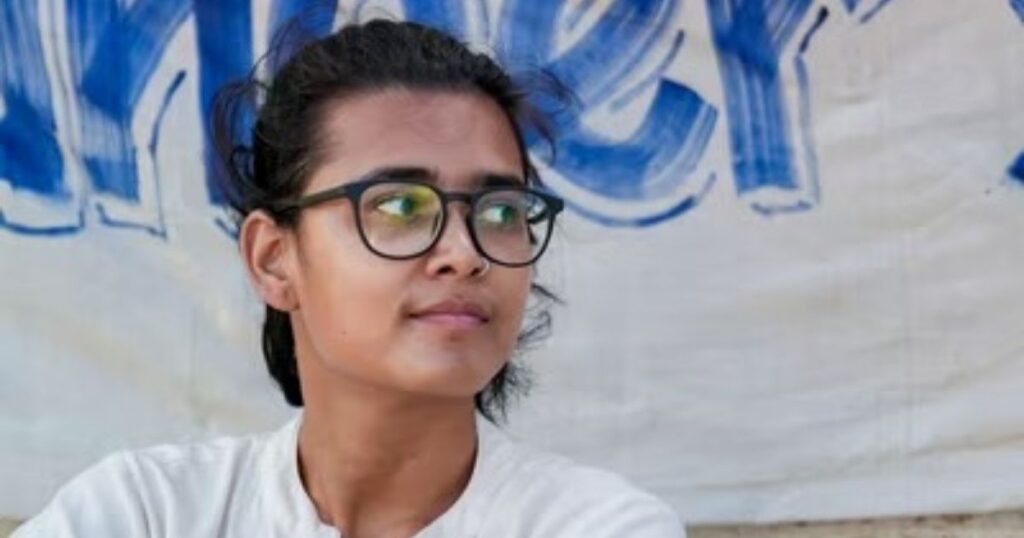
India’s economy has grown rapidly, but so has the gap between rich and poor. Combined with a huge youth population and widespread social media access, these conditions created a movement that seemed to erupt overnight.
Before asking where this movement will go next—or whether it will leave a lasting mark on the Modi government—we should ask a more important question:
Does Pakistan Face the Same Pressures?
Could similar conditions be taking shape in Pakistan?
The first trigger in India was leaked examination papers. Pakistanis know this problem all too well. From repeated paper leaks to the 2024 MDCAT controversy, examination scandals have become disturbingly familiar.
What receives less attention is that concerns about irregularities are now reaching even some of Pakistan’s most respected examinations. Anyone who has visited CSS examination centres has witnessed the administrative disorder firsthand.
The farther one moves from Punjab’s major cities, the weaker the oversight often becomes. Rumours about irregularities are growing, and it may not be long before many of them come into the open.
Pakistan’s unemployment crisis is even more severe. India’s stronger economic growth still absorbs at least some of its expanding workforce. Pakistan’s sluggish growth leaves hundreds of thousands of young people without opportunities each year.
A Generation Running Out of Opportunit
Many survive through freelancing and online work, but AI is shrinking those opportunities, while government rightsizing is reducing public-sector jobs. Beneath the surface, a volcano of frustration continues to grow.
Compared with Pakistan, Indian youth also enjoy freedoms that are far more limited here. Freedom of expression is broader, and despite its shortcomings, the judicial system still provides a meaningful avenue for justice. Even a perceived failure by the authorities was enough to trigger nationwide protests.
Indian youth also have greater freedom to gather, socialize, and enjoy public life. They have more opportunities for sports, recreation, and cultural activities. In Pakistan, leisure has increasingly become the privilege of the wealthy, while ordinary young people face a growing sense of suffocation. Every day, we see young motorcyclists lined up on roadsides and subjected to needless humiliation.
Why Has Pakistan’s Youth Remained Silent?
If Pakistan has so much frustration, anxiety, and injustice, why has it not erupted into mass protest?
It is an important question.
But no one can predict when a silent volcano will erupt.
For now, the state’s administrative machinery maintains a tight grip. Fear and uncertainty have been cultivated here in ways that India has not experienced to the same extent.
There is another reason. About a decade ago, much of Pakistan’s youthful anger was channelled into a particular political movement. Expectations soared, and so did enthusiasm. But those hopes remained largely unfulfilled. Later, mistakes by the political leadership many young people had rallied behind helped suppress what might otherwise have become a much larger storm.
Yet one question remains.
Has the anger of Pakistan’s youth really disappeared? Have they truly changed their views or abandoned the sympathies they once held?
Probably not.
It may take only a single spark to ignite a fire that no one can contain.
The Real Solution Lies Beyond Suppression
Suppressing voices is never a lasting solution. The real answer lies in addressing the problems confronting young people.
There is still time.
Pakistan’s examination system must be made transparent, credible, and secure. The CSS system, which still enjoys considerable public confidence, should be protected by eliminating every emerging weakness before it grows into a crisis.

Instead of chasing artificial popularity through promotional campaigns, orchestrated hashtags, and self-congratulatory advertising, the focus should be on genuine economic growth that creates jobs for young people.
A change in mindset is equally important. Let young people celebrate life. Encourage music, art, cinema, theatre, and other positive cultural activities instead of viewing them with suspicion. This is an awakened generation—do not suffocate it. Bring recreation out of exclusive compounds and back to public parks, cinemas, theatres, festivals, and affordable restaurants. Let this generation laugh. Let it play. Let it live.
Finally, the administrative machinery must also be held accountable. Young citizens deserve dignity, not humiliation.
It is worth remembering that the spark behind India’s recent movement was not a great national crisis. It was ignited by something as small as a single insulting remark.