
 Iqbal Shahid
 A proposed law expanding official passport privileges has reopened an old debate about elite capture in Pakistan
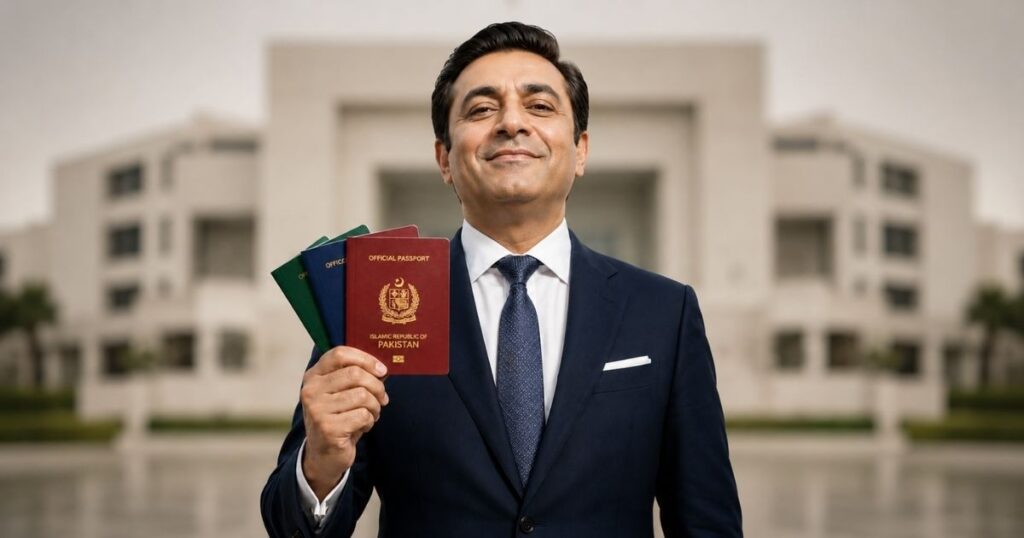
The people of Pakistan woke up this week to an interesting—and rather revealing—piece of news. While millions of ordinary Pakistanis continue to travel on one of the world’s weakest passports, Parliament is considering whether another category of privileged citizens should gain access to the Pakistan’s blue passport. The proposal appears modest: it seeks to extend this facility to the dependent children of former members of Parliament up to the age of twenty-eight. Yet behind this seemingly routine amendment lies a much larger question: when does an official facility become an inherited privilege?
This is not simply a debate about passports. It is a debate about the philosophy of public service. Every democracy must decide whether public office is a temporary responsibility entrusted by the people or the beginning of a permanently privileged status. Pakistan now finds itself confronting that very question.
When Privilege Learns to Inherit
Official passports are neither unique to Pakistan nor unusual. Almost every country issues them to facilitate government business. Ministers, diplomats, senior civil servants and other public officials frequently travel abroad on behalf of the state. Special travel documents simplify visa procedures, reduce administrative delays and enable governments to conduct diplomacy efficiently. They exist for practical reasons—not as rewards for holding office or symbols of social prestige.
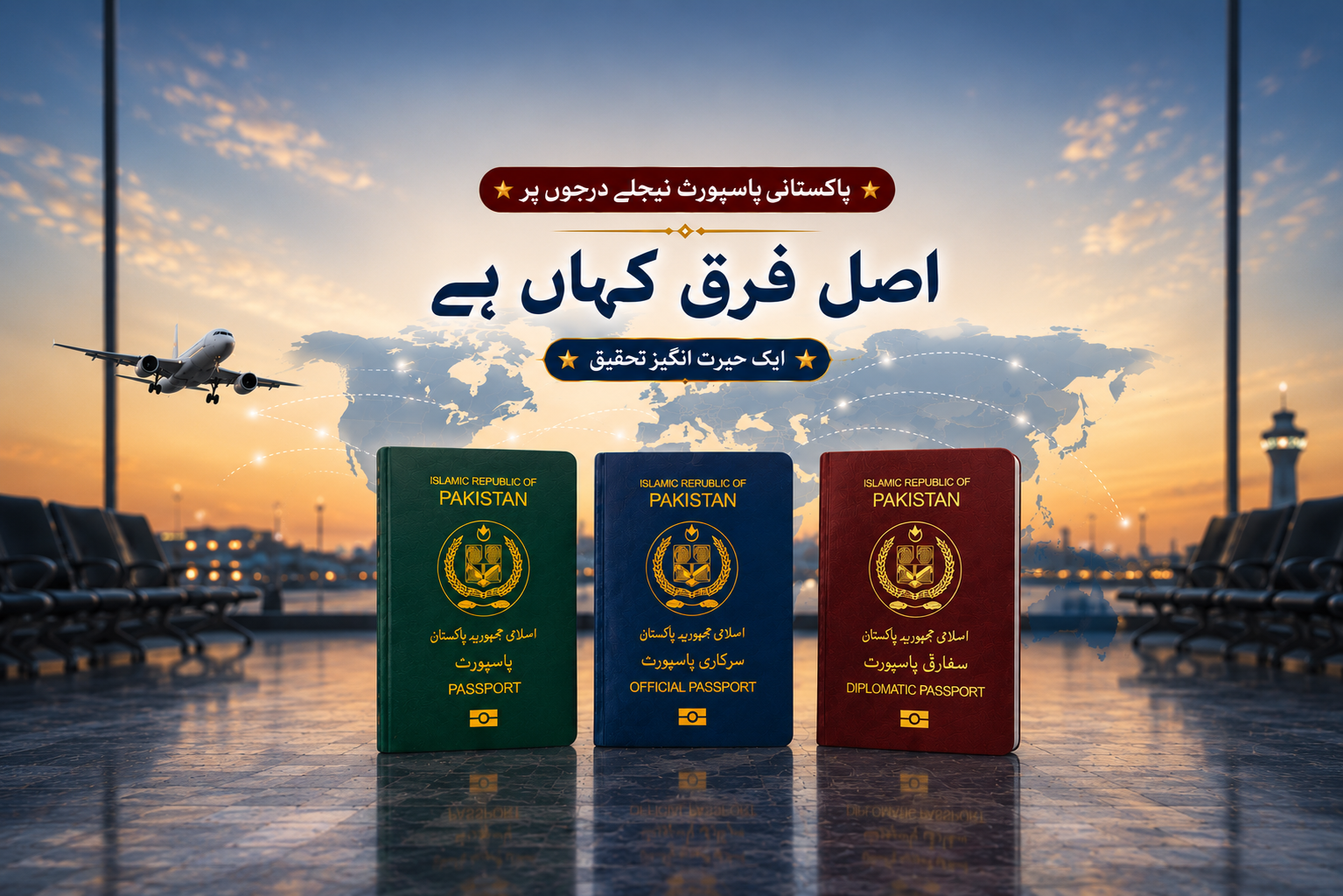
Pakistan’s official passport carries significant advantages. It offers visa-free access to more than fifty countries, whereas the ordinary Pakistani passport provides visa-free or visa-on-arrival access to only about thirty destinations, placing it among the world’s least powerful travel documents. That distinction is understandable when the holder is representing Pakistan on official duty. The privilege flows from the office, not from the individual.
The present controversy begins after public service ends.
Under Pakistan’s existing rules, serving members of Parliament receive official passports during their tenure. Former members are already permitted to retain those passports after leaving office, and the facility also extends to their spouses. The amendment currently before Parliament seeks to widen that entitlement by including their dependent children up to the age of twenty-eight.
Parliamentarians are not the only beneficiaries. In 2023, the government extended lifetime official passport facilities to serving and retired Grade-22 civil servants. The entitlement also covers their spouses, parents and dependent children. The current proposal therefore does not introduce the idea of extending official passports to family members; it expands a policy that already exists for another category of public office-holders.
Seen individually, each of these decisions may appear limited. Taken together, however, they reveal a gradual expansion in the circle of people entitled to a document originally intended to facilitate official government business.
The Quiet Expansion of Power
The significance of this debate becomes clearer when Pakistan’s policy is compared with those of other democracies.
The United Kingdom, Germany and France issue official or diplomatic passports only when members of Parliament or other public officials travel abroad on official assignments. These passports are linked to the specific purpose and duration of that assignment rather than to the office itself. India and Bangladesh follow a somewhat broader approach, issuing official passports to serving members of Parliament and eligible family members, but only for the duration of their term in office. In neither model does the entitlement ordinarily continue after public office has ended.
Pakistan has gradually adopted a different approach. Over the years, eligibility has expanded beyond serving office-holders to include several categories of retired officials and, in some cases, their immediate family members. The proposed amendment would extend that framework another step by bringing the dependent children of former parliamentarians within its scope.
Whether that is the right policy is for Parliament to decide. But before reaching that decision, it is important to understand not only what the proposed amendment changes, but also how Pakistan’s existing policy compares with the practices followed elsewhere. That broader perspective explains why a seemingly technical amendment has become a matter of public debate.
Part Two: Why this debate matters, what the government itself says about official passports, and why the real priority should be strengthening the passport carried by ordinary Pakistanis.
The Passport That Matters Most
The debate becomes even more significant when viewed alongside the condition of Pakistan’s ordinary passport. For millions of Pakistanis, international travel remains a difficult experience. Students seeking higher education, entrepreneurs exploring foreign markets, professionals attending international conferences and families planning overseas visits often face lengthy visa procedures and limited travel options. Their concern is not access to a blue passport, but the limited global mobility of the green one.
Ironically, the government itself has acknowledged the importance of keeping official passports limited. According to the Ministry of Interior, Pakistan once had around 70,000 official passports in circulation. That number has been reduced to fewer than 50,000, with further reductions planned. Interior Minister Talal Chaudhry has also stated that an unusually large number of official passport holders weakens Pakistan’s efforts to negotiate visa-free travel arrangements with other countries.
That statement changes the context of the entire debate. If reducing the number of official passports strengthens Pakistan’s diplomatic position, then proposals to expand eligibility naturally invite public scrutiny. The issue is no longer whether one additional category deserves the privilege; it is whether expanding such privileges serves the country’s broader interests.
A Nation or an Exclusive Club?
No one disputes that ministers, diplomats and public officials travelling abroad on state business require official passports. They are an essential administrative tool for governments around the world.
The more difficult question arises after official responsibilities have ended. Should privileges created for the conduct of public business continue indefinitely, and should they gradually extend to family members who themselves perform no official function? These are legitimate questions for any democracy, particularly when similar practices are uncommon in many comparable countries.
The present controversy also provides Parliament with an opportunity to review Pakistan’s entire official passport policy rather than addressing one category at a time. Good governance requires that exceptional privileges remain linked to a clear public purpose and are reviewed periodically to ensure they continue to serve that purpose.
The Journey That Should Begin
Ultimately, the real measure of success is not how many people qualify for the blue passport but how valuable the green passport becomes. A stronger ordinary passport would benefit every Pakistani—students, businesspeople, professionals, tourists and overseas families alike. That objective deserves to be at the centre of Pakistan’s diplomatic efforts.
The current debate has also created another impression that policymakers should avoid. Every expansion of special entitlements risks reinforcing the perception that Pakistan is evolving into a country of two classes: one whose privileges continue to grow, and another still waiting for easier travel, better opportunities and more effective representation abroad.
Public office should remain a public trust, not a pathway to permanent privilege. Pakistan’s priority should therefore be clear: strengthen the passport carried by millions, rather than continually expanding the privileges attached to the passport carried by a few.