
 Iqbal Shahid
 Why Is the Pakistani Passport Ranked So Low? Understanding the Real Reasons
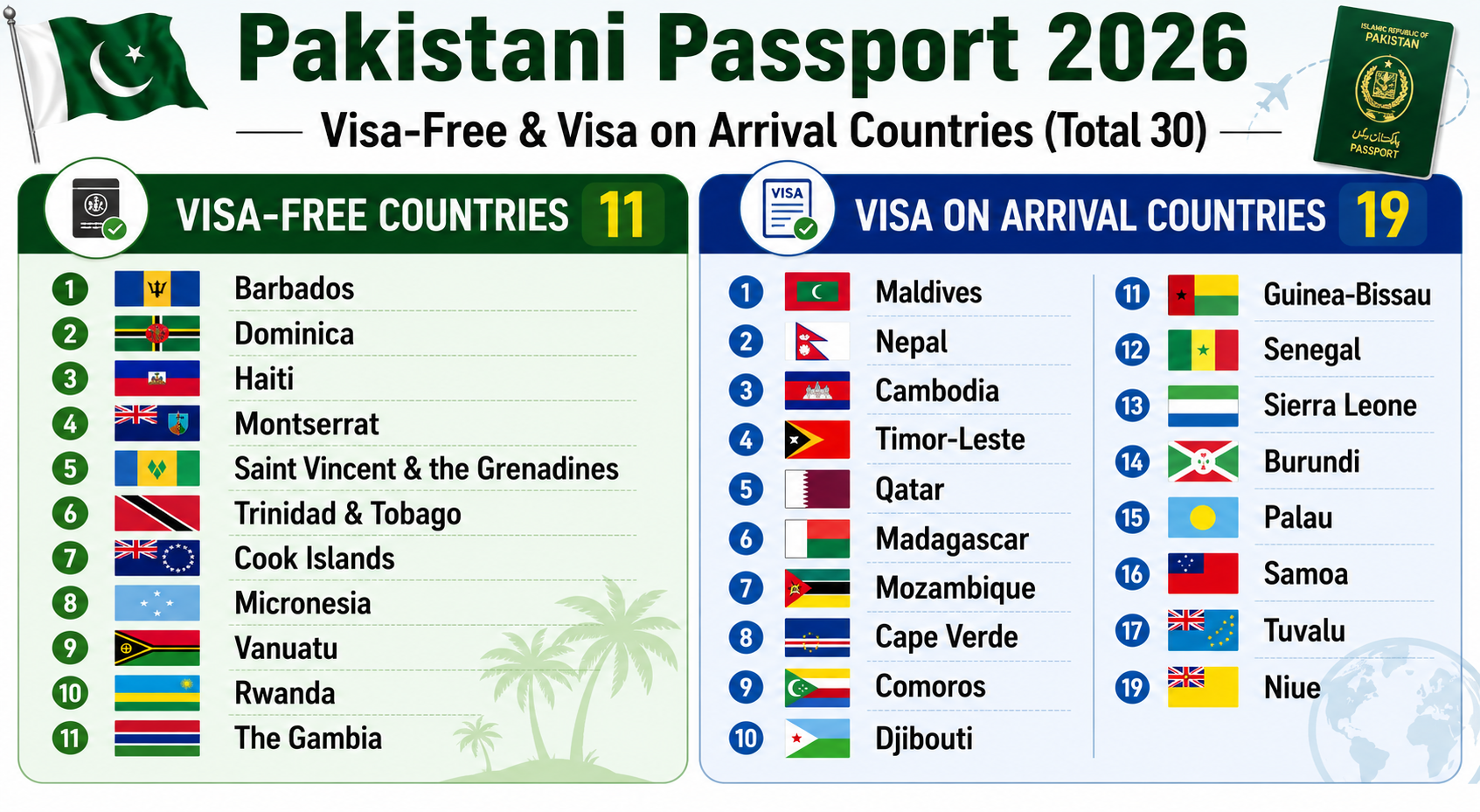
Whenever a new global passport ranking is released, many Pakistanis react with disappointment. In the latest global rankings, Pakistan’s passport stands near the bottom of the list, offering visa-free or visa-on-arrival access to only about 30 destinations.
The usual explanations quickly follow. Some people blame the passport itself, others point to Pakistan’s international image, while many believe the ranking is simply a reflection of how the world views Pakistan.
But before accepting these explanations, it is worth asking a different question.
If Pakistani citizens cannot travel visa-free to many of the world’s most important countries, can citizens of those same countries travel visa-free to Pakistan?
In many cases, the answer is also no.
This simple fact reveals an important reality: passport rankings are often less about the passport booklet itself and more about the number of mutual visa-free arrangements that exist between countries.
What Passport Rankings Actually Measure
Many people assume that a low-ranked passport must be technically weak or insecure. In reality, passport rankings such as the Henley Passport Index primarily measure travel access.
The more countries that allow a passport holder to enter without obtaining a visa beforehand, the stronger that passport is considered to be.
In other words, passport rankings are largely a reflection of international mobility rather than the quality of the passport booklet, the efficiency of passport offices, or the patriotism of a country’s citizens.
This distinction is important because it helps explain Pakistan’s position more accurately.
The Main Reason: Too Few Visa-Free Agreements
The most important reason behind Pakistan’s low ranking is the relatively small number of visa-free and visa-waiver agreements available to ordinary Pakistani citizens.
Currently, Pakistani passport holders can access around 30 destinations through visa-free or visa-on-arrival arrangements, including approximately 11 visa-free destinations and 19 destinations that offer visas on arrival.
By contrast, the world’s strongest passports provide access to more than 180 destinations without requiring a visa beforehand.
The difference is not primarily the passport booklet itself. It is the number of agreements that governments have negotiated over many years.
Many countries with highly ranked passports have spent decades expanding reciprocal travel arrangements for their citizens. Pakistan, for a variety of reasons, has secured far fewer such agreements.
Reciprocity Matters More Than Many People Realize
Passport strength is often built on reciprocity.
Countries are generally more willing to offer easier access to citizens of states that provide similar facilities in return.
For many years, Pakistan maintained a relatively restrictive visa regime, even for citizens of countries whose passports rank among the strongest in the world. Pakistan’s unique security challenges and geopolitical environment understandably encouraged caution about allowing unrestricted entry to foreign nationals.
However, such caution also limited opportunities for broader reciprocal visa-free arrangements.
Another factor is that countries usually pursue visa-free agreements when there is clear mutual benefit. Tourists, investors, business travellers, students, and researchers create incentives for governments to make travel easier.
The more attractive a country becomes as a destination, the stronger its case for negotiating easier travel arrangements with others. In that sense, passport strength is connected not only to diplomacy but also to tourism, business activity, and international engagement.
The Migration Factor Cannot Be Ignored
Any honest discussion of Pakistan’s passport ranking must also acknowledge another important reality.
Concerns about illegal immigration, visa overstays, asylum claims, and the use of fraudulent documents have influenced the policies of some countries, particularly in Europe and the West.
Immigration authorities closely monitor such trends when deciding whether to grant easier travel access to citizens of another country. Pakistan has faced challenges in this area, and these concerns have undoubtedly affected perceptions in some destinations.
However, this explanation alone does not fully account for Pakistan’s ranking.
Many countries that require visas from Pakistani citizens are not major destinations for asylum seekers or long-term migrants. This suggests that while migration concerns are important, the broader issue remains the limited number of visa-free agreements available to ordinary Pakistani passport holders.
The Weight of History
Historical perceptions have also played a role.
Before the introduction of machine-readable passports in the mid-2000s, Pakistan used older manual passports that were comparatively easier to alter or misuse. During the 1980s, 1990s, and early 2000s, some individuals used forged documents, substituted photographs, or false identities to gain entry into foreign countries or seek asylum.
After the introduction of more secure passports, there were still occasional reports of individuals obtaining passports through fraudulent underlying identity documents rather than through weaknesses in the passport booklet itself.
Over the years, Pakistan has significantly strengthened its passport and identity verification systems. Modern Pakistani passports contain internationally recognized security features and are far more secure than earlier versions. Nevertheless, reputations built over decades do not disappear overnight. In international mobility, perceptions often change more slowly than reality.
A Question Worth Asking
There is another aspect of the issue that receives relatively little attention.
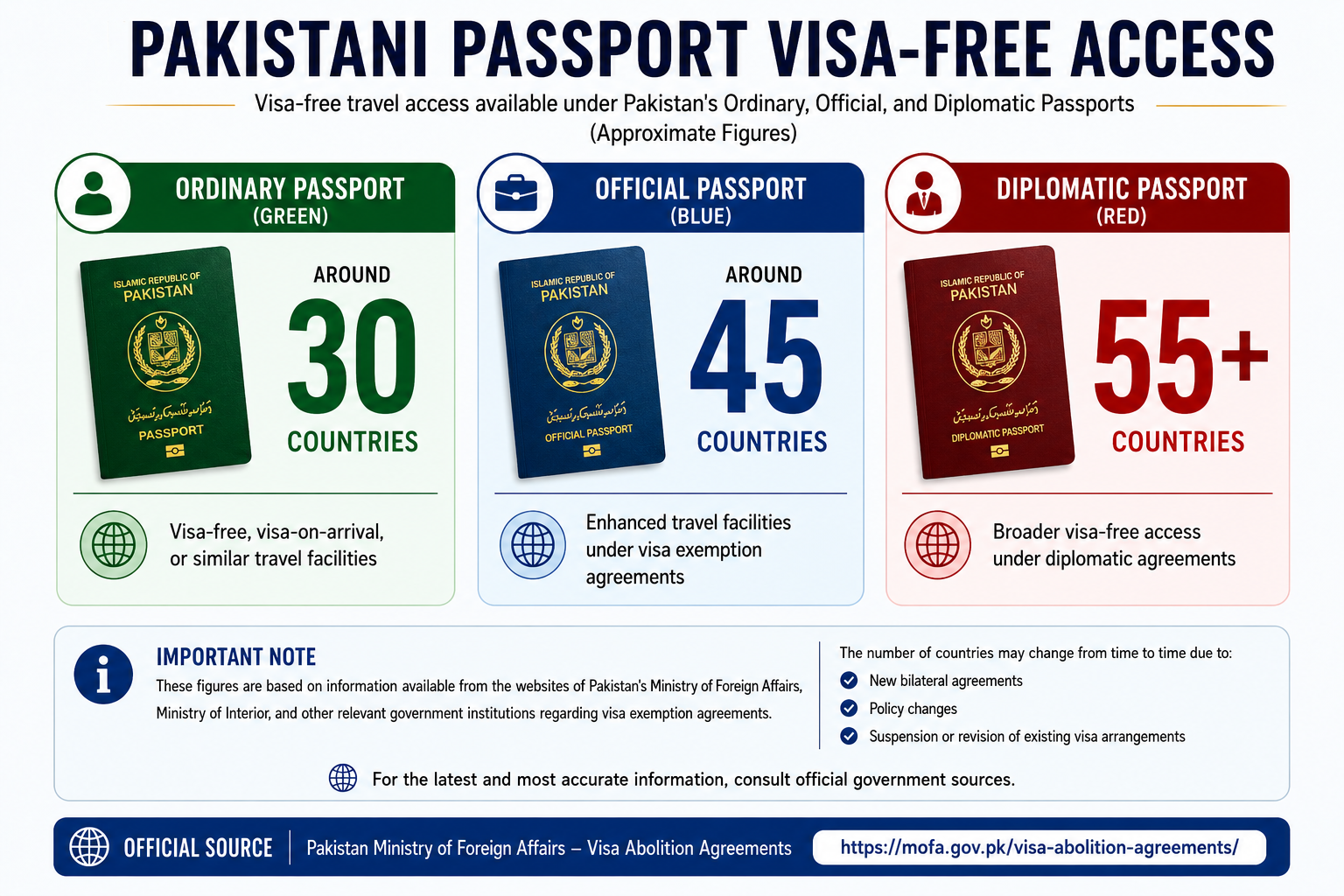
Pakistani diplomats and senior government officials travel on diplomatic and official passports that provide access to significantly more countries than the ordinary passport used by most citizens.
This does not explain Pakistan’s low ranking, nor is Pakistan unique in having such arrangements. However, some observers argue that because policymakers themselves travel under more favourable mobility arrangements, expanding visa-free access for ordinary citizens has not always received the same level of sustained attention.
Whether one agrees with this view or not, the debate highlights an important point: mobility for ordinary citizens deserves greater policy focus than it has traditionally received.
Looking Ahead
Improving Pakistan’s passport ranking is not simply a matter of redesigning the passport booklet or introducing new security features.
The more important challenge is to expand international mobility through diplomacy, reciprocal travel arrangements, tourism development, stronger economic engagement, and continued improvements in visa compliance and identity verification.
Pakistan’s low ranking is not the result of a single factor. It reflects a combination of limited visa-free agreements, historical policy choices, security considerations, migration concerns, and long-standing international perceptions.
Yet among all these factors, one reality stands out above the rest: passport rankings are ultimately a measure of travel access.
The countries whose citizens can travel most freely are usually those that have built the largest networks of reciprocal travel arrangements. If Pakistan wishes to improve its position in the future, expanding those networks will remain the most direct path forward.
About the Author
Iqbal Shahid is a former senior civil servant and lawyer with experience in strategic communication, media, and public affairs. He is the Founder and Editor-in-Chief of Zindagi Pro.